



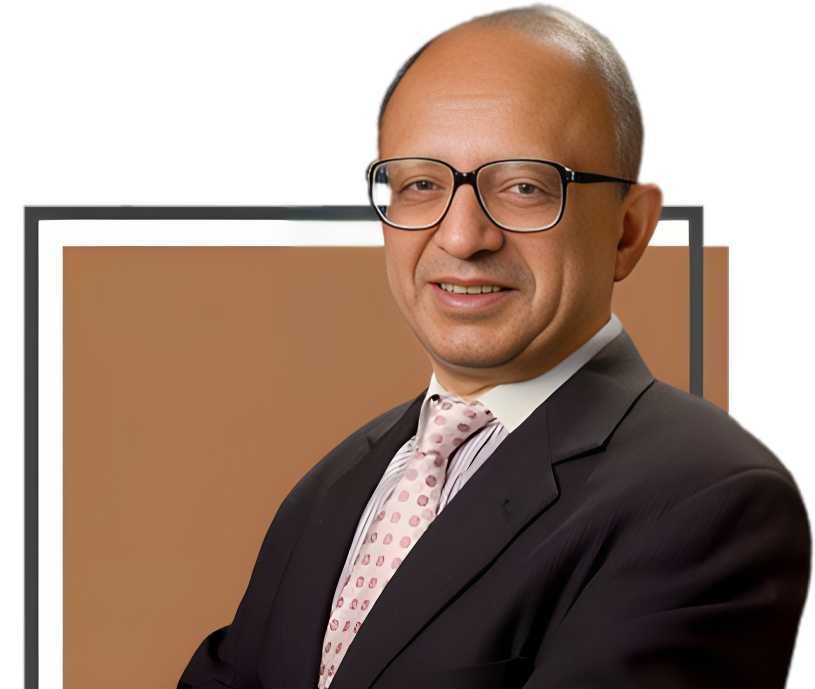
Union Budget 2026 Analysis by Swaminathan Aiyar in Mumbai
Sri Shanmukhananda Fine Arts @ Sangeet Sabha and V Sankar Aiyar Memorial Committee, Mumbai organised their annual ‘Budget 2026 Analysis’ post the presentation of the budget by Finance Minister in the parliament. Swaminathan Aiyar has been presenting this annual budget series over the years at the same venue in Mumbai.
Swaminathan Aiyar, noted Indian economist and journalist, characterised the Union Budget 2026 as neither transformative nor damaging, describing it as “unremarkable” in its overall impact. In his assessment, the budget prioritised continuity over bold reform, reflecting a cautious approach amid global economic uncertainty. He observed that measures which might earlier have been considered supplementary were given greater prominence, suggesting an emphasis on incremental adjustments rather than sweeping structural change.
“What used to be the footnotes in earlier budgets have become the high notes of this budget.”
Continuity Amid Global & Domestic Headwinds
Aiyar suggested that this measured approach may have been intentional. Against the backdrop of global trade volatility, including uncertainty in Indo-US relations and the after-effects of high tariffs, the government appeared keen to maintain stability and avoid unnecessary disruption. India’s economic performance provided room for such restraint: GDP growth reached 8% in the first half of the current financial year, well above the long-term average of 6.5% since 2000. Even if growth moderates to 7.5% for the full year, he noted, it would remain strong by international standards.
Fiscal Consolidation & Capital Expenditure
On fiscal management, Aiyar acknowledged the finance minister’s success in meeting consolidation targets that many had viewed as challenging and that The fiscal deficit, which expanded sharply during the pandemic, has been brought down to 4.4%, with a further reduction to 4.3% announced—consistent with the five-year roadmap outlined in 2021. However, he felt that a 0.1% reduction in the fiscal deficit was negligible, and ought to have been brought down further. While the debt-to-GDP ratio has edged down from 56.1% to 55.6%, he pointed out that there remains scope for further improvement relative to the 40% benchmark recommended by earlier finance commissions.
At the same time, capital expenditure increased from about Rs 11 trillion to Rs 12.2 trillion, underscoring the government’s continued focus on public investment, particularly at a time when private investment momentum has yet to fully recover.
Markets, Speculation & Retail Risk
Market reactions to the budget were also relatively muted. Initial stock market movements were later linked more closely to global commodity price corrections than to budget-specific announcements. Aiyar drew attention to the risks faced by retail participants in the futures and options segment, referring to an RBI report indicating that a large majority of retail investors incur losses. He questioned whether higher transaction taxes alone would be sufficient to address this issue, suggesting that alternative measures such as a large amount to be paid as an entry deposit would have probably acted as a better deterrent.
Subsidies, Political Economy & Reform Constraints
Aiyar highlighted subsidies as an area where long-term challenges persist. The fertiliser subsidy, amounting to Rs 1.7 trillion, continues to influence usage of urea as opposed to phosphatic fertilisers and was also detrimental to soil. Similar complexities arise from heavily subsidised electricity for agriculture, which has implications for groundwater sustainability. He noted that political realities—frequent elections and strong stakeholder interests—often constrain the pace and depth of reform, shaping realistic growth expectations closer to 7% rather than the aspirational 10%.
A Budget Focused on Stability
In conclusion, Aiyar viewed Budget 2026 as reflective of an economy that is performing reasonably well and therefore requires careful management rather than disruptive change. While it may not feature the far-reaching reforms sometimes anticipated in a government’s third term, the budget reinforces stability, fiscal discipline, and gradual progress—qualities that, in his view, may be well-suited to the current economic context.